
Technology & Perspectives
Why CO₂-Neutral Is Almost Always a Lie
A breakfast with crispbread, certificate sorcery, and the question: Who’s fooling whom?
The Crispbread and the Halo
Sometimes, the day starts directly in the right mood…
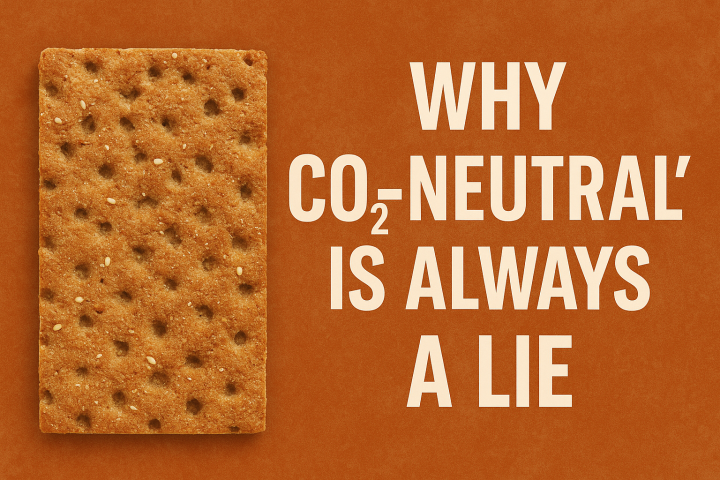
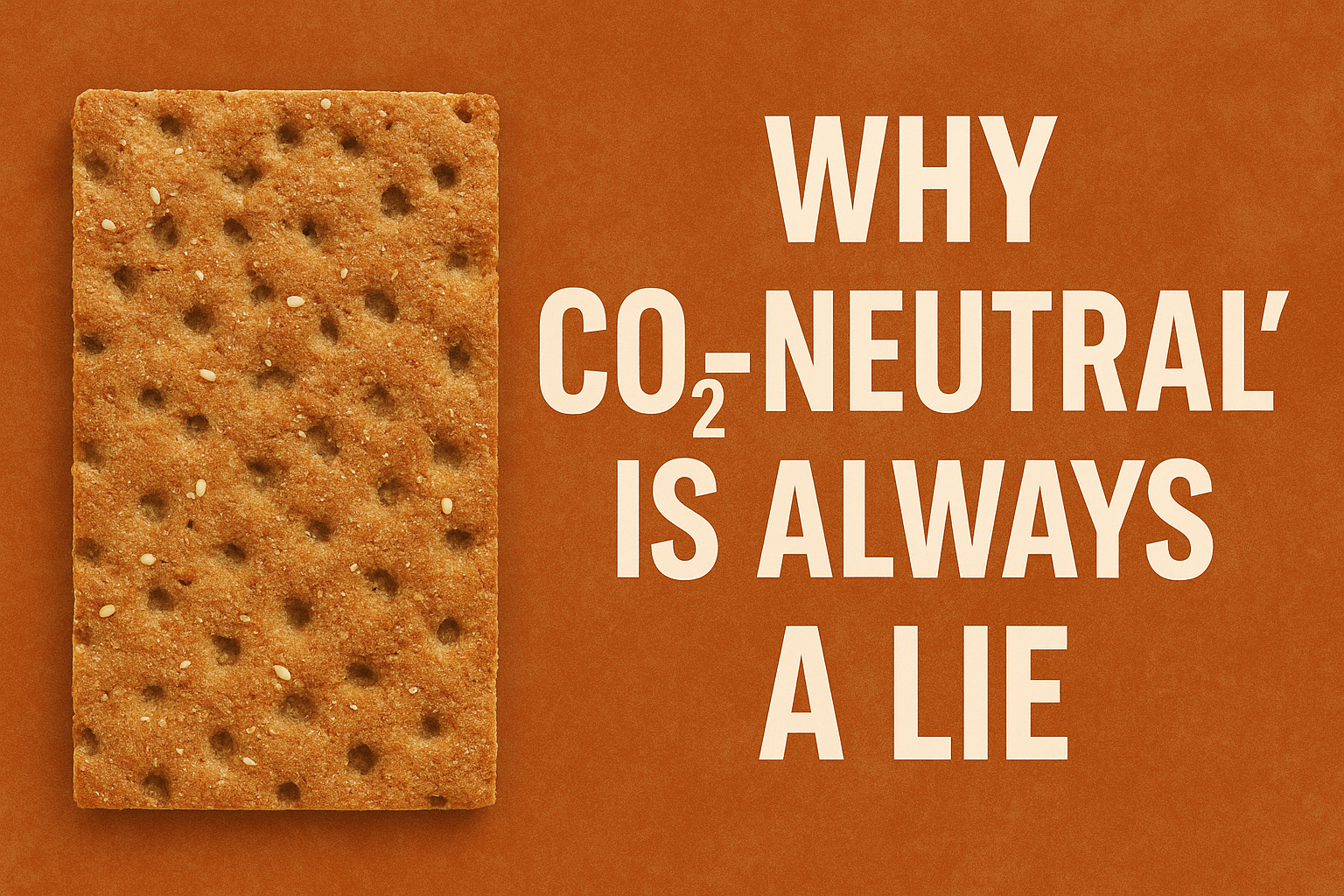
It was just another morning. Coffee. Newspaper. And crispbread. And then: the label on the package. “100% CO₂-neutral.” I paused. Again. As always. And asked myself: How on Earth does a piece of crispbread become carbon neutral?
Because as much as I love my breakfast – I’m not gullible. And maybe I am overthinking this, but…
I know it takes energy to make a product. Machines run. Raw materials are transported and packaged. Even the little sticker that says “climate neutral” uses ink and electricity. And still: “CO₂-neutral”?
The Myth of CO₂-Neutrality
First of all: the term “CO₂-neutral” is not protected. Anyone can use it. Theoretically, I could call my vacuum cleaner carbon neutral if I planted a tree somewhere.
Wasa (like many brands) relies on carbon offset certificates. The principle:
- You calculate (or estimate) your own emissions.
- You fund projects that supposedly absorb or prevent emissions elsewhere.
- And voilà – you’re “climate neutral.”
Sounds nice, doesn’t it? Except this idea has more holes than Swiss cheese in a summer heatwave.
What’s Really Being Offset (and What’s Not)
The Limits of Offsetting
Most certificates are based on projects like reforestation, renewable energy, biogas initiatives, or emission-reducing tech.
Problem 1: Additionality. Many of these projects would have happened anyway. The certificate doesn’t actually cause a difference, but is still sold.
Problem 2: Permanence. A tree only stores CO₂ while it’s alive. If it’s cut down, everything goes back into the atmosphere.
Problem 3: Verifiability. Many projects are hard or impossible to monitor. Who checks in five years whether the solar cookers in Uganda are still in use?
Problem 4: Shifting Instead of Reducing. Emissions aren’t avoided – they’re just “balanced out” elsewhere. The net global impact? Still harmful.
The Great Greenwashing Machine
So why this entire circus?
One word: Marketing.
Consumers want to do the right thing. Companies give them the comforting illusion. Thus emerges a thriving industry of pretend sustainability.
Some examples?
- Shell advertised “climate-neutral fueling.” After public outcry, the ad was banned. Source: Deutsche Umwelthilfe, 2023
- The label “climate neutral” on flights has been shown to increase booking behaviour, especially among frequent flyers. Source: ETH Zurich, 2022
Why This Is So Dangerous
1. It creates a false sense of peace. If I believe I’m climate-neutral, I stop asking how much I could actually reduce.
2. It promotes opacity. Most people have no idea how emissions are calculated – or whether the offset projects even still exist.
3. It displaces real solutions. As long as companies can “buy” their way out, real change in production, logistics, and energy strategy is postponed.
How We Could Do Better
- Reduction first, offsetting last. Offsetting should only be a last resort.
- Mandatory transparency. What exactly was calculated? Which projects were funded?
- Independent oversight. Offset projects must be verifiable, effective, and long-lasting.
- Ban misleading claims. “Carbon neutral” shouldn’t be used without full context.
So What Does That Mean for My Crispbread?
Nothing! It’s hot outside… so I just needed something to yell at! I still like my crispbread. I’ll still buy it. But not because it claims to be climate neutral. Because it’s crunchy, tasty – and honest about what it is (and isn’t).
A crispbread is not a climate hero. And that’s fine.
But maybe honesty is the first truly sustainable step we can take.
Sources:
- Deutsche Umwelthilfe: https://www.duh.de
- ETH Zurich: https://ethz.ch
- Stiftung Warentest on CO₂ offsets: https://www.test.de
- German Federal Environment Agency (UBA): https://www.umweltbundesamt.de
